

Quick Answer
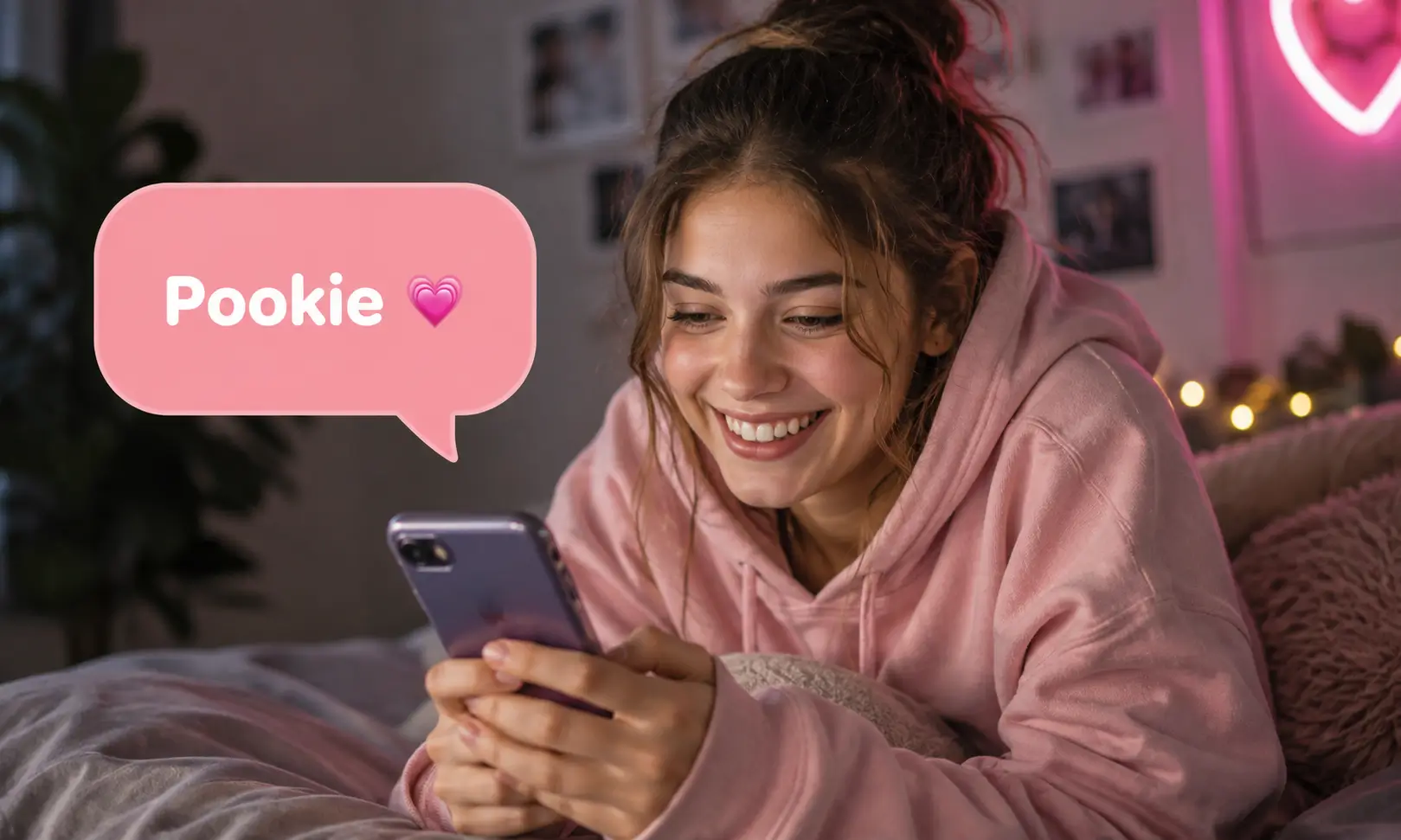
The pookie meaning is simple: it’s a playful, affectionate nickname people use for a partner, close friend, or pet to show love and closeness. Rooted in decades-old English slang and revived by viral TikTok couples, the pookie meaning depends more on tone than on any strict definition.
| Term | Meaning | Common Use | Tone |
|---|---|---|---|
| Pookie | Affectionate nickname | Partners, friends, pets | Playful, warm |
You’ve probably seen “pookie” in texts, TikTok comments, or couple captions. It sounds sweet, playful, and a little mysterious. Once you understand the pookie meaning, all of that makes a lot more sense. Below, we cover where the word came from, how people use it today, and why it keeps spreading online.
What Is the Pookie Meaning?
At its core, the pookie meaning centers on affection. People use it for partners, close friends, or even pets. It always carries a warm, playful tone rather than a formal one. Unlike slang that hides a coded or negative meaning, pookie stays simple: it’s affection, expressed casually. No acronym sits behind it, and no hidden agenda comes with it. The word does exactly what it sounds like, and that’s part of why it spread so easily.
What sets the pookie meaning apart from other nicknames is its flexibility. A word like “babe” almost always signals a romantic partner. “Bestie” almost always signals a friend. Pookie doesn’t draw that line as sharply. The same word moves comfortably between a couple’s private texts, a group chat between friends, and a caption under a photo of someone’s dog.
Pookie Meaning Origin: Where Did the Word Come From?
The pookie meaning goes back much further than most people assume. Dictionary sources including Merriam-Webster date its first documented print use as a general term of endearment to the mid-1960s. People used it as a specific nickname even earlier than that. One popular theory traces its roots to early-1900s German household slang, from “Püppchen,” meaning “little doll.” Parents used that word affectionately for young children. Another theory points to Southern U.S. household use, where “pookie” worked as a common nickname for kids long before it carried any romantic meaning.
Pop culture also kept the word alive between generations. A character named Pookie appeared in the 1995 film New Jack City, and the name has surfaced periodically in music and television since. What changed recently isn’t the word itself, but how fast it spread. Social media took a quiet, decades-old family nickname and turned it into everyday Gen Z vocabulary within a few viral videos.
Why Did the Pookie Meaning Go Viral on TikTok?
TikTok didn’t invent the pookie meaning, but it definitely popularized it. Viral couple content pushed the word into the mainstream — most notably creators Campbell and Jett Puckett, whose videos of Jett affectionately calling his wife “pookie” reached millions of viewers. Those videos introduced the nickname to a new generation that had likely never heard it as a household term. Creators known specifically for the bit, like Prayag Mishra, who goes by “Big Pookie” online, pushed it further and built an entire online persona around the word.
From there, the word spread the way most internet slang does. Viewers copied it in their own captions. Comment sections picked it up as a joke. Eventually it moved beyond couples into friend groups entirely. A specific creator or couple usually starts this pattern by making a word feel personal and relatable. The audience then adopts it as shorthand for their own relationships, keeping the emotional tone but dropping the original context.
Pookie isn’t the only word that has traveled this path recently. Terms like SMH started as quick reaction shorthand before becoming everyday texting vocabulary. FAFO followed a similar route from niche internet phrase to mainstream slang. Understanding how these words spread makes it easier to spot the next one before it’s everywhere.
How Different Platforms Use the Pookie Meaning
The word doesn’t behave identically everywhere online. Platform context explains a lot of why the pookie meaning feels so versatile.
- TikTok: Couples use it in captions, and creators exaggerate it in comedic skits.
- Instagram: People pair it with heart emojis under couple or pet photos.
- X (Twitter): Users apply it more loosely and sarcastically, sometimes toward strangers as a joke.
- Discord and gaming communities: Friends use it platonically, often as a running bit.
- Texting: People use it most sincerely here — this is usually where the word carries its most genuine meaning.
Knowing the platform helps you read tone correctly. The same word that reads as a joke in a public reply can be completely sincere in a private text.
Who Do People Call Pookie?
Romantic partners use the nickname most often, since it expresses love without sounding overly serious. It isn’t limited to couples, though:
- Close friends use it jokingly, often as an affectionate tease
- Pet owners use it as a cute name for animals, especially dogs and cats
- Parents sometimes use a similar tone for young children, echoing the word’s older household roots
- Online communities use it humorously in comment sections — the “pookie is a fart” joke trend shows just how flexible the tone can get
The common thread is comfort. The nickname tends to show up between people who already share some emotional closeness, not strangers in formal settings. Using it too early in a new relationship can feel forced rather than affectionate.
Is the Pookie Meaning Romantic or Platonic?

Both — and that’s the point. The word carries no fixed relationship label. Tone and context decide whether it reads as flirty, sweet, or purely a joke between friends. That’s different from a word like “boo,” which leans more explicitly romantic. Pookie stays more versatile precisely because it doesn’t commit to one relationship type. That flexibility is central to the pookie meaning, and it’s a big reason the word spread so widely across friend groups and couples alike.
Pookie Meaning vs. Other Terms of Endearment
Seeing pookie next to similar nicknames makes its specific tone easier to understand.
| Nickname | Typical Relationship | Tone | Romantic Only? |
|---|---|---|---|
| Pookie | Partners, friends, pets | Playful, warm | No |
| Boo | Partners | Romantic, intimate | Mostly yes |
| Bae | Partners | Romantic, casual | Mostly yes |
| Bestie | Friends | Warm, platonic | No |
| Sweetheart | Partners, family | Gentle, classic | No |
Pookie sits in a unique spot on this list. It feels warmer than “bestie” but less exclusively romantic than “boo” or “bae.” That middle ground explains why it works across so many different relationships.
How Do You Know If Someone Means It?
Tone matters more than the word itself. A few signs point to genuine affection rather than just a bit:
- People use it consistently, not just once as a joke
- It shows up during supportive or caring moments, not only comedic ones
- Actions back it up — words and behavior match
- People use it privately, not just for an audience
Forced or one-off use of a nickname rarely signals real closeness. Regular, natural use usually does.
When the Pookie Meaning Might Not Land Well
Because the word is so casual, it isn’t right for every setting. A few situations worth avoiding:
- Professional contexts — even a friendly workplace rarely reads playful nicknames well
- New relationships — using it before there’s real comfort can feel premature
- With someone who’s asked you not to — plenty of people find the word overused, so just ask instead of assuming
If in doubt, gauge the other person’s reaction the first time you use it. Don’t assume it will land the way it does online.
Why Nicknames Like Pookie Feel So Powerful
Affectionate nicknames stick around across generations for a real psychological reason, not just as internet trends. Small, private words create a shared language that outsiders don’t have access to. That exclusivity makes them feel intimate. Hearing someone use a nickname consistently and warmly can reinforce a sense of being valued, especially during small, everyday moments rather than big romantic gestures.
This also explains why nicknames soften tense conversations. Dropping a playful word into a disagreement can lower the emotional temperature without either person needing to say anything explicitly conciliatory. None of this is unique to pookie specifically — it’s true of nicknames generally. But it explains why this simple, decades-old word keeps finding new audiences instead of fading out like most short-lived slang.
What Are Cute Alternatives to Pookie?
Some couples prefer classic pet names like sweetheart. Others lean casual with boo or babe. Many relationships eventually land on a name that’s entirely their own, often coming from an inside joke or a specific memory rather than the internet. There’s no universal “best” nickname — the right one is whichever feels natural and comfortable for both people. Plenty of long-term couples still use nicknames they invented themselves, years before “pookie” ever trended.
Looking for another nickname or slang term to explore next? Browse more definitions on MeaningSpot.
How Do You Use Pookie Naturally in a Conversation?
If you want to introduce the nickname without it feeling forced:
- Start in lighthearted, low-stakes conversations
- Watch the other person’s reaction before making it a habit
- Use it privately before using it in front of others
- Let it develop gradually rather than forcing it early on
- Drop it if the other person seems uncomfortable
The nickname works best when it grows naturally out of shared moments. Don’t use it to manufacture closeness that isn’t there yet. Like most internet slang, it’s a starting point, not a rule. Plenty of the most enduring nicknames in real relationships are ones nobody else uses at all.
Pookie Meaning: FAQs
Is pookie only used in romantic relationships? No. Many people use it jokingly with close friends or as a nickname for pets.
Where did the word pookie come from? The pookie meaning traces back decades. People have used it as a term of endearment since the 1960s. One theory ties it to early-1900s German household slang; another points to Southern U.S. household use. Its recent resurgence comes from viral TikTok couples.
Is calling someone pookie considered cute? Yes — most people read it as a playful, affectionate nickname rather than anything serious.
Is pookie romantic or platonic? Both. Tone and relationship context determine the meaning, not the word itself.
What’s the difference between pookie and boo? People use “boo” more explicitly for romance, mostly between partners. Pookie stays more playful and versatile across relationship types, including friends and pets.
Is it okay to call a stranger pookie online? It happens often as a joke in comment sections. Not everyone enjoys that nickname, though, so read the room before assuming it will land well.
Conclusion
The pookie meaning is simple but emotionally powerful. Tone defines this nickname far more than any strict definition does, and it carries whatever warmth people put into it. Its decades-long history as a quiet household nickname, combined with its recent viral spread through TikTok, shows how internet culture doesn’t always invent new language. Sometimes it just rediscovers old words and gives them a bigger stage. At MeaningSpot, we love breaking down modern language trends like this one — check back for more slang guides as new terms take off.
Curious about more slang and internet terms? Explore other guides on MeaningSpot to keep up with how online language keeps evolving.