

Scrolling through TikTok comments or a group chat can feel like reading a different language when you don’t know the slang. From texting friends to browsing social media, you’ll constantly run into abbreviations, acronyms, and expressions that seem confusing at first. Understanding everyday online slang for beginners doesn’t just help you keep up — it makes chatting more fun and lets you actually understand what people mean. Whether you’re brand new to online spaces or just want to catch up on the latest terms, this guide breaks down the most common internet slang in the simplest way possible, covering texting codes, teen slang, gaming terms, and social media expressions all in one place.
Slang isn’t just decoration on top of normal language, either. For a lot of younger internet users, it’s become the default way of communicating — quicker, more expressive, and often funnier than typing everything out in full sentences. Once you understand the basics, you’ll notice the same handful of terms repeating across almost every platform, which makes the learning curve shorter than it first appears.
Quick Answer
Everyday online slang for beginners refers to the short words, acronyms, and expressions people use in texts, DMs, and social media to communicate quickly — things like LOL, BRB, IKR, and NGL. These terms save time, sound casual, and are used across texting, gaming, and platforms like TikTok and Instagram. Most of this slang falls into a few categories: texting shortcuts, gaming callouts, and social media reactions — and once you know the pattern, new terms become much easier to guess.
Slang doesn’t stop at the basics, though. Some terms carry more specific context — for example, gyatt and IYKYK are two terms that trip up a lot of beginners because they carry cultural context beyond a simple abbreviation. Worth a quick look if you keep seeing them pop up.
What Is Everyday Online Slang for Beginners?
Internet slang covers the short forms, fun words, and quick codes people use to communicate faster online. People call it by different names — internet lingo, web talk, chat codes, or digital language — but it all means the same thing: a faster, more casual way of chatting. In fact, new slang appears constantly, especially through TikTok, gaming communities, and viral memes.
What makes online slang different from regular abbreviations is how quickly it evolves. A term can go from unknown to everywhere within a single week, driven by one viral video or a popular streamer using it on camera. Because of this, staying current with slang is less about memorizing a fixed list and more about understanding the general categories terms tend to fall into — reactions, compliments, insults, and shorthand for common phrases.
Why Beginners Should Learn Everyday Online Slang
People use online slang for a few simple reasons: it’s quick, it saves time, it feels fun, and it signals that you’re in on the culture. On top of that, slang works especially well in fast-moving spaces like gaming chats and group texts, where typing full sentences slows things down.
There’s also a social layer to it. Using the right slang at the right moment can make a conversation feel more natural and less formal, almost like a shared code between friends. On the other hand, using outdated or incorrect slang can have the opposite effect, which is exactly why beginners benefit from learning the current, accurate meanings rather than guessing from context alone.
Common Texting Slang Every Beginner Should Know

Here are some of the most widely used texting abbreviations beginners actually run into:
- LOL – “Laughing Out Loud”
- BRB – “Be Right Back”
- IKR – “I Know, Right?”
- NGL – “Not Gonna Lie”
- TBH – “To Be Honest”
- IMO / IMHO – “In My (Humble) Opinion”
- FR / FRFR – “For Real / For Real, For Real”
- NP – “No Problem”
- HMU – “Hit Me Up”
- WYD – “What You Doing?”
- OMW – “On My Way”
- JK – “Just Kidding”
- TTYL – “Talk To You Later”
- SMH – means someone is shaking their head in disappointment — check the full SMH meaning guide if you want the full breakdown, since it’s used in more contexts than most people realize.
These terms show up so often that most people stop noticing they’re even abbreviations. Still, for a beginner, seeing “brb” or “omw” for the first time can genuinely be confusing without context — which is exactly why having a quick reference like this helps.
Everyday Online Slang for USA Teens & Gamers
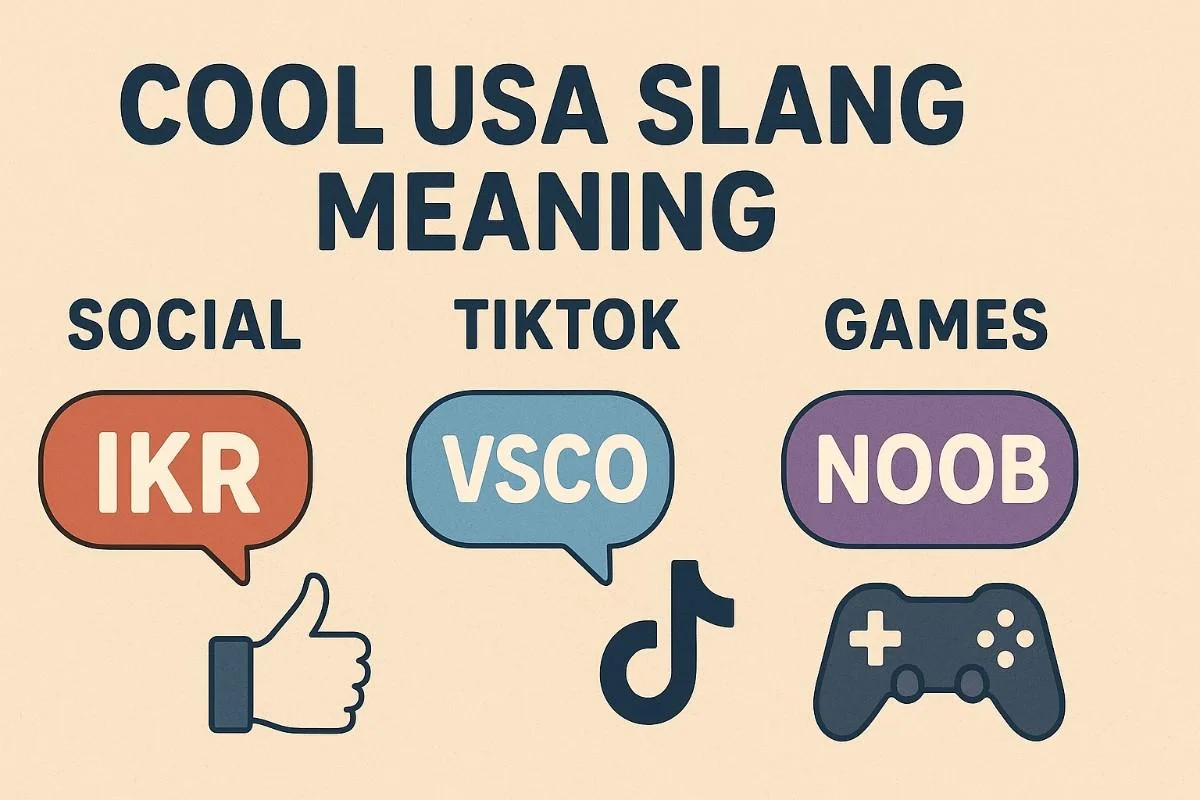
Some slang trends specifically among teens and gamers:
- GOAT – “Greatest Of All Time”
- CAP / NO CAP – meaning a lie, or “I’m not lying”
- BET – used to agree or confirm something
- W / L – shorthand for a “win” or a “loss”
- GG – “Good Game,” used at the end of matches
- AFK – “Away From Keyboard”
- Sus – short for “suspicious,” popularized by online games
- Clutch – pulling off a difficult win at the last moment
- Salty – being upset or bitter about losing
Gaming slang in particular tends to spread fast because it’s tied to live-streamed content. A term used by a popular streamer during a match can end up in millions of chats within days, which is part of why this category changes faster than almost any other.
Everyday Online Slang on Social Media & TikTok
Terms that show up constantly across TikTok, Instagram, and other social apps:
- Glow Up – a positive transformation, physical or otherwise
- Main Character Energy – acting confidently, like the lead in your own story
- It’s Giving… – used to describe a vibe or impression something gives off
- Slay – doing something impressively well
- Rizz – charisma, especially in flirting
- Delulu – short for “delusional,” usually used jokingly
- Ate (and left no crumbs) – meaning someone did something perfectly
- Vibe Check – assessing the mood or energy of a situation
If a term like this shows up in your DMs specifically tied to flirting, it’s also worth understanding phrases like OFC, since these often appear in the same casual conversations. Similarly, a lot of TikTok slang crosses over into everyday texting once it becomes popular enough, so knowing these terms helps well beyond the app itself.
Where Does This Slang Come From?
Apps like TikTok, Instagram, Discord, and Snapchat all drive everyday online slang because they reward quick, catchy communication. As a result, new terms trend fast and spread across platforms within days. Meaningspot tracks these shifts regularly so beginners always have an up-to-date reference.
Much of today’s slang also borrows from African American Vernacular English (AAVE), gaming culture, and internet meme communities, then gets reshaped as it spreads. Understanding where a term comes from can help explain why it means what it means, even when the connection isn’t obvious at first glance.
How to Learn Slang Without Feeling Overwhelmed
For beginners, the fastest way to get comfortable with online slang isn’t memorizing long lists — it’s paying attention to context. When you see an unfamiliar term, the surrounding conversation usually gives a strong clue about whether it’s positive, negative, or neutral. From there, a quick search (or a guide like this one) fills in the exact meaning.
It also helps to start with the handful of terms that show up constantly — LOL, IKR, NGL, and similar staples — before moving on to more niche or fast-changing slang tied to specific platforms or trends.
FAQs
What is internet slang?
Short, fast words people use online to communicate quickly.
Is slang safe for kids?
Most everyday slang is harmless, but some adult-oriented slang should be avoided or explained with context.
Why do people use so much online slang?
It saves time, feels casual, and matches the pace of online culture.
Does internet slang change often?
Yes — new terms appear constantly, especially through TikTok and gaming communities.
Is slang the same as memes?
Not exactly. Memes can create slang, but not all slang comes from memes.
Do all online platforms use the same slang?
Mostly, yes — though gaming platforms and TikTok each have some terms unique to their communities.
Conclusion
Internet slang moves fast, but once you understand the basics, keeping up gets a lot easier. This guide covers the everyday online slang for beginners you’re most likely to run into — from texting shortcuts to gaming terms and TikTok trends. With a resource like Meaningspot, learning new slang stays simple, accurate, and genuinely useful, no matter how quickly the next trend arrives.